Is one invalid vote too many? Inside the Federal review of California's voter lists
Published Oct 20, 2026
by- Scott Kovacs
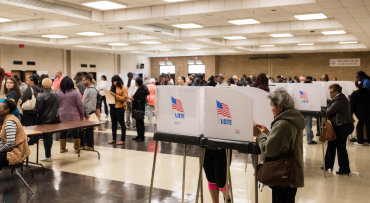
Federal authorities, having made claims regarding voter registration lists in California, filed a lawsuit against the state and Los Angeles County election officials that sought to force elections officials not to count up to 20,000 registered voters’ ballots until it could be determined they were valid voters. Media outlets are reporting that they wanted to eliminate the ballots entirely, which does not appear to be true.
The federal government had asked California to review the list of 20,000 registered voters’ ballots because federal prosecutors suspect those voters could be non-citizens. and, in partnership with federal agencies, to determine whether citizens were listed. California failed to do so.
The situation involves distinct arguments and actions from both federal officials and California state officials.
State officials maintain that California has strict built-in safeguards to prevent non-citizens from registering. They argue that rushing to purge or block thousands of voters based on potentially flawed data weeks before an election risks unlawfully disenfranchising legitimate American citizens.
Despite these supposed safeguards, on October 19, 2026, the DOJ announced federal voter fraud charges against 28 foreign nationals (all lawful permanent residents) living in California.
Acting Deputy Attorney General Trent McCotter met with reporters at a news conference regarding the federal investigation into alleged noncitizen voting. He stated, “Today’s charges demonstrate why that lawsuit is so important. It’s about preventing voter fraud that cancels out the votes of U.S. citizens. Enforcing federal law increases the integrity of elections.”
But California Attorney General Rob Bonta told reporters that voter fraud is wrong. If the suspects are guilty, they should be held accountable, he said. “Twenty-eight out of 23 million registered voters in California is just … a drop in the bucket numerically,” he said. “It’s 0.0001% of all the registered voters, and it makes the point that there is no widespread voter fraud.”
To many Americans, every vote does matter. A fraudulent vote eliminates a legal vote, when they vote opposite to another person’s decision. Here are some excuses being made as to why voter fraud seems to be accepted by some people.
On CAL MATTERS website: “The Trump administration charged 28 immigrants with allegedly illegally voting or registering to vote in California in its latest push to hunt down voter fraud. Such cases are exceedingly rare and not proof elections are fraudulent.”
“Attempting to vote illegally is extremely rare. This audit is proof that Michigan’s election safeguards are working, and I look forward to their continued efforts to protect voters and expand voting rights” said state Rep. Tonya Myers Phillips (D-Detroit), after the Michigan Department of State (MDOS) announced that, after an exhaustive audit, they identified only 15 probable non-citizens. Only 15 is 15 too many, some believe.
In the United States, the debate surrounding voter registration and the strictness of voting eligibility is rooted in fundamental principles of constitutional law, democratic theory, and governance.
According to legal scholars and policy organizations, the requirement that only registered citizens vote serves several core purposes.
A foundational tenet of American democracy is that a nation's laws should be determined exclusively by the members of its political community. Under the U.S. Constitution, citizenship defines that political community for federal elections. Proponents of strict citizenship requirements argue that allowing non-citizens to vote dilutes the political power of citizens and undermines the concept of national sovereignty.
Even a single illegal vote is unacceptable because it can theoretically alter the outcome of close, local elections. More broadly, advocates state that maintaining strict registration standards prevents fraud, ensures every legal vote carries its full weight, and bolsters public confidence in election outcomes. From this perspective, any perception of vulnerability in the system can erode trust in democratic institutions, not looking into voter fraud. As a registered voter, one should expect the government to make sure all those that are voting are eligible.
But the weak arguments by critics are repeated as a defense: Implementing increasingly stringent proof-of-citizenship laws can inadvertently disenfranchise eligible American citizens. Gathering specific documents, such as birth certificates or passports, can be costly and difficult for low-income voters, students, the elderly, and minorities, potentially creating unnecessary barriers to a fundamental constitutional right.
Ultimately, the conversation centers on a delicate balance: maximizing access for all eligible American citizens while maintaining robust security measures to ensure the integrity of the ballot box. But even with strong measures in place, there will be those who try to “beat the system”, and if there are questions, should be addressed and investigated.
Scott Kovacs is a writer and editor for Patriotic Way. He primarily writes about politics, patriotism, and truth in reporting. Previously, he worked in the medical field as a Registered Nurse for 27 years.